|
Cape Breton Golf
“The line is just left of the bunkers, at that notch you see in the mountain in the distance,” says my grizzled caddie as we ponder the shot. However, at this point, the round barely underway, my mind hasn’t fully engaged in the task at hand. I’m just tickled to be here; on Cape Breton, on Canada’s first true links course, and one of the hottest new golf destinations in North America.
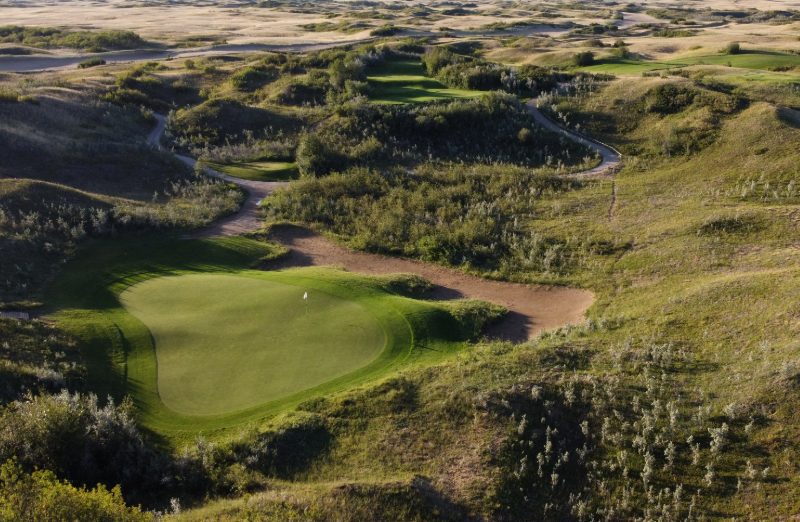
The second hole at Cabot Links, a daunting par-5 with a green perched high above the rippled sea, features a blind approach shot. Careening through a gorse-lined gully with a gnarly collection of wind-sculpted bunkers guarding the crest of the hill, the hole is a riveting reminder of what authentic links golf is all about.
Surprisingly, I hit a wind-cheating 3-wood that never leaves the target. “Aye,” my caddie says in his heavy Nova Scotia accent. “We’re going to get along real good today, boy. Real good.” Unfortunately, it was one of only a handful of good shots I hit during the round. Nonetheless, he had me at “Aye.” And Cabot Links – a beautiful and barren old-world links of the finest order – had me on the first tee.
Actually, ever since a late fall visit five years ago, with the eye-popping autumn colors at prime, the entire province of Nova Scotia has held a lofty position in my mind. And, with its stunning coastline peppered with quaint fishing villages, its vibrant Celtic music scene, its amazing coastal highway – the world-renowned Cabot Trail – and some of the friendliest, down-home folk you’re ever going to meet, the island of Cape Breton, especially, is a place I’m fond of.
To be completely honest, it’s not really a place you’d think would be home to two of the greatest golf courses in Canada. It’s too small, too remote, and too rugged and rural for world-class golf, you’d think. Indeed, with a total population of just over 110,000 people – many of whom have fishing, mining, and music in their bloodlines – you wouldn’t think golf would even be on the radar here. But, it most definitely is. And this small Maritime island is home to two of the finest golf experiences in Canada…eh.
The original “gem” on Cape Breton, in the cozy coastal town of Ingonish, is the venerable Highland Links course. Designed by the great Stanley Thompson in 1934, Highlands Links is a rolling, rambling, 6-mile crusade that’s long been considered a bucket-list course. As far as I’m concerned, it’s the best layout – in terms of the quality of its golf holes and its masterful routing – in Canada. Unfortunately, its conditioning has, at times, been suspect. However, thanks to some fairly recent developments, that’s well on the road to changing.
What’s also changing in Cape Breton is the quantity of courses. While the historic Highland Links used to be the only valid reason for serious golf junkies to make the trip, there are now a few more fine courses to round out the getaway.
Bras d’or Links, a sprawling Graham Cooke design near Sydney, opened to high praise last year. The course serves up wonderful views of the lake and tips out at 7,100 yards so, make no mistake, you’re getting the full meal deal here.
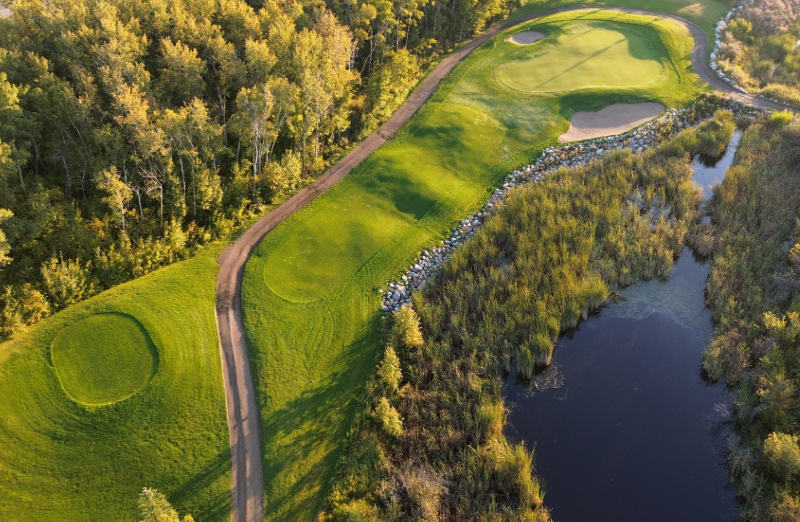
Opened in 2003, Bell Bay in Baddeck is another relative newcomer that certainly merits mention. Although the course falls short in terms of ocean views, it’s isolated, tree-lined holes – and a stellar finishing run – yield a memorable day of golf in a secluded parkland setting. Another great reason to visit Baddeck is the Alexander Graham Bell museum, a Canadian National Historic site.
And, not surprisingly, given the fact that Bandon Dunes founder Mike Keiser is involved in the Cabot Links project, a sister course – Cabot Cliffs – is currently breaking ground and is scheduled to open in 2015.
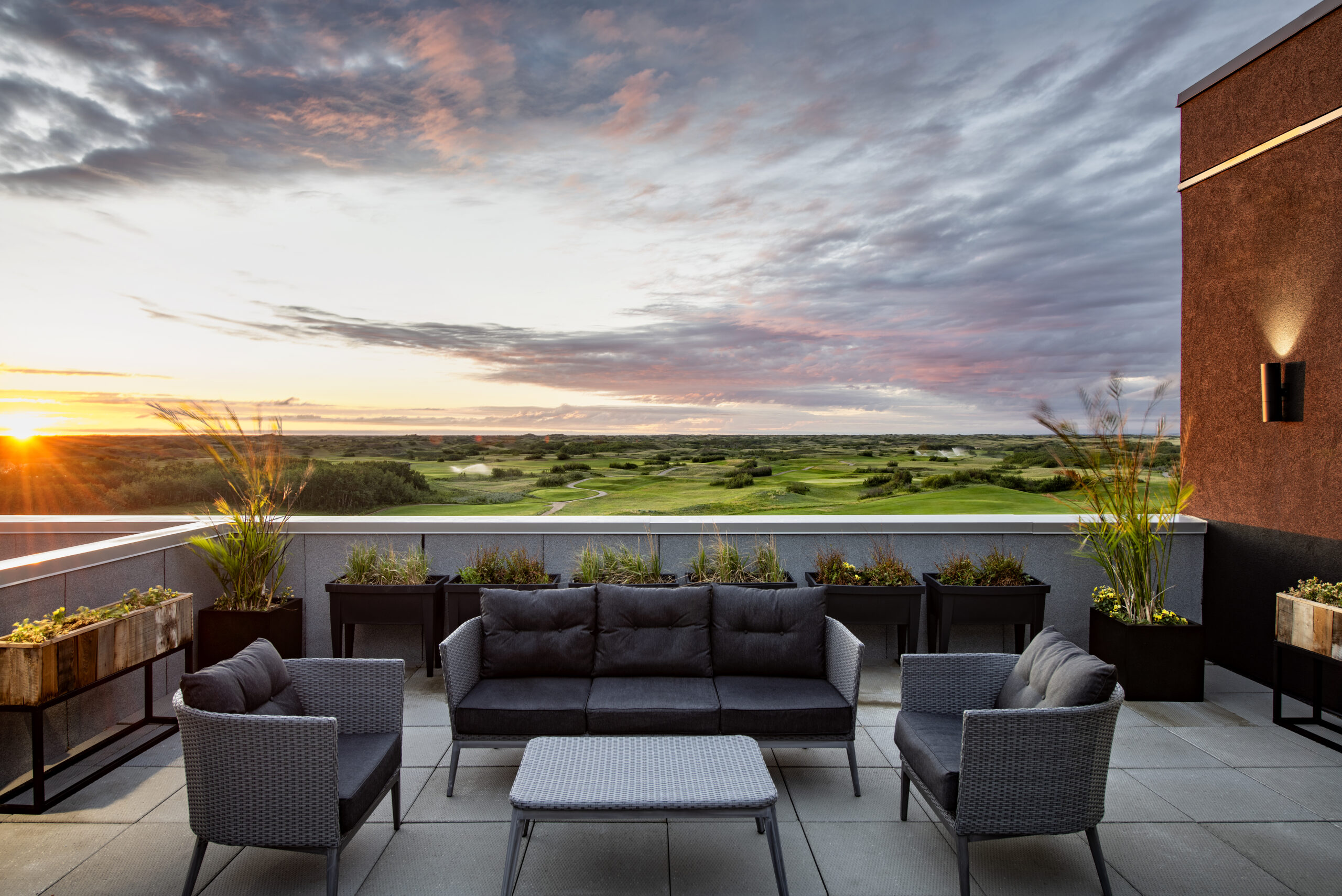
However, it’s Cabot Links that is, at least for now, getting the bulk of the attention. The course, designed by architect Rod Whitman, is links golf in every sense of the word. While some Canadian courses have a hint of Scottish links (you know, the sandy, wind-blasted duneland near the sea), with perhaps a hole or two that might qualify, the entire experience at Cabot Links unfolds on beautiful and bona fide linksland.
The original visionary of Cabot Links (and Cabot Cliffs, which will be designed by the talented duo of Bill Coore/Ben Crenshaw) is Ben Cowan-Dewar. As one of the fastest players I’ve ever had the privilege of golfing with (we played, walking with our caddies, in two hours and thirty-five minutes), Cowan-Dewar isn’t shy about the remarkable similarities his project has to Bandon Dunes, which is, unquestionably, the most successful major golf development the world has seen in the past decade.
“Like Bandon, we are walking only,” he says on the 3rd hole as I try to keep up with his brisk gait. “It’s how the game was meant to be played. You can take a caddie, but you don’t have to. You won’t find a GPS-equipped cart around here.”
Like Bandon, the emphasis at Cabot Links - which now boasts a cozy, 80-room boutique hotel and an outstanding restaurant serving, largely, local seafood - will always remain firmly fixed on the golf. As with Cabot Links, finding the absolute best routing for Cabot Cliffs will be paramount. The clubhouse and restaurant, or any other built structures, will play second fiddle to the golf. A residential component is not in the works.
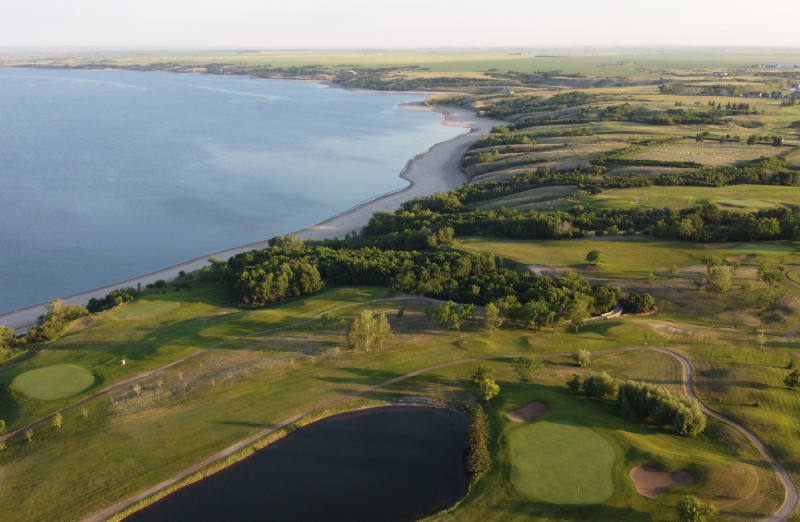
Like many of the world’s premier links courses, a round at Cabot Links features plenty of interaction with the town, the beach, (five holes play directly along the sea, including a wonderful run from the 12th through the 16th), the small fishing wharf, and people strolling along the popular boardwalk.
While the run of holes along the shore are the most dramatic, the 11th, a tucked-away cape hole that swerves along the harbor, gets my nod as the best hole on the course. Like every hole at Cabot, it’s a puzzle that requires a thoughtful approach.
After three rounds at Cabot (tip: you can play more than one round if you play fast!), I needed to hit the road. After all, I still had a couple of rounds at Highland Links to look forward to. And, separating me from my next stop was three hours of the most captivating coastal scenery in North America. Unquestionably, the fact that the courses are linked together by the Cabot Trail adds immeasurably to the experience of golfing on Cape Breton.
Not surprisingly, my two rounds at Highland Links were highly memorable. Although the course was somewhat soggy, the greens were significantly better than the last time I played, something Parks Canada (the course is situated inside Cape Breton Highlands National Park and is owned by the government), have tried mightily to fix. Also, a bunker restoration and tree removal project - to help with turf conditions and to capture the incredible ocean views - have been completed. As far as the attention of golf connoisseurs from around the world? Well, thanks to what is already here - and what is yet to come - that’s been captured as well.
For more golf information on Cape Breton and to book your trip visit www.golfcapebreton.com.
Andrew Penner is a golf writer and photographer based in Calgary, Alberta, Canada. You can visit him at www.andrewpenner.com.
|